Lime Kiln
Lime Kiln
Lime is produced by calcining limestone at high temperatures. Depending on the production process and capacity, different types of kilns are used for calcination.
The two commonly used kiln types are:
- Rotary Kiln
- Vertical Shaft Kiln / PFR Kiln
Vertical Shaft and PFR Kilns are generally more energy-efficient, while Rotary Kilns are used for higher production capacities. The refractory lining plays an important role in maintaining kiln performance. The choice of refractory depends on the kiln design, operating temperature, fuel and the conditions in each zone.
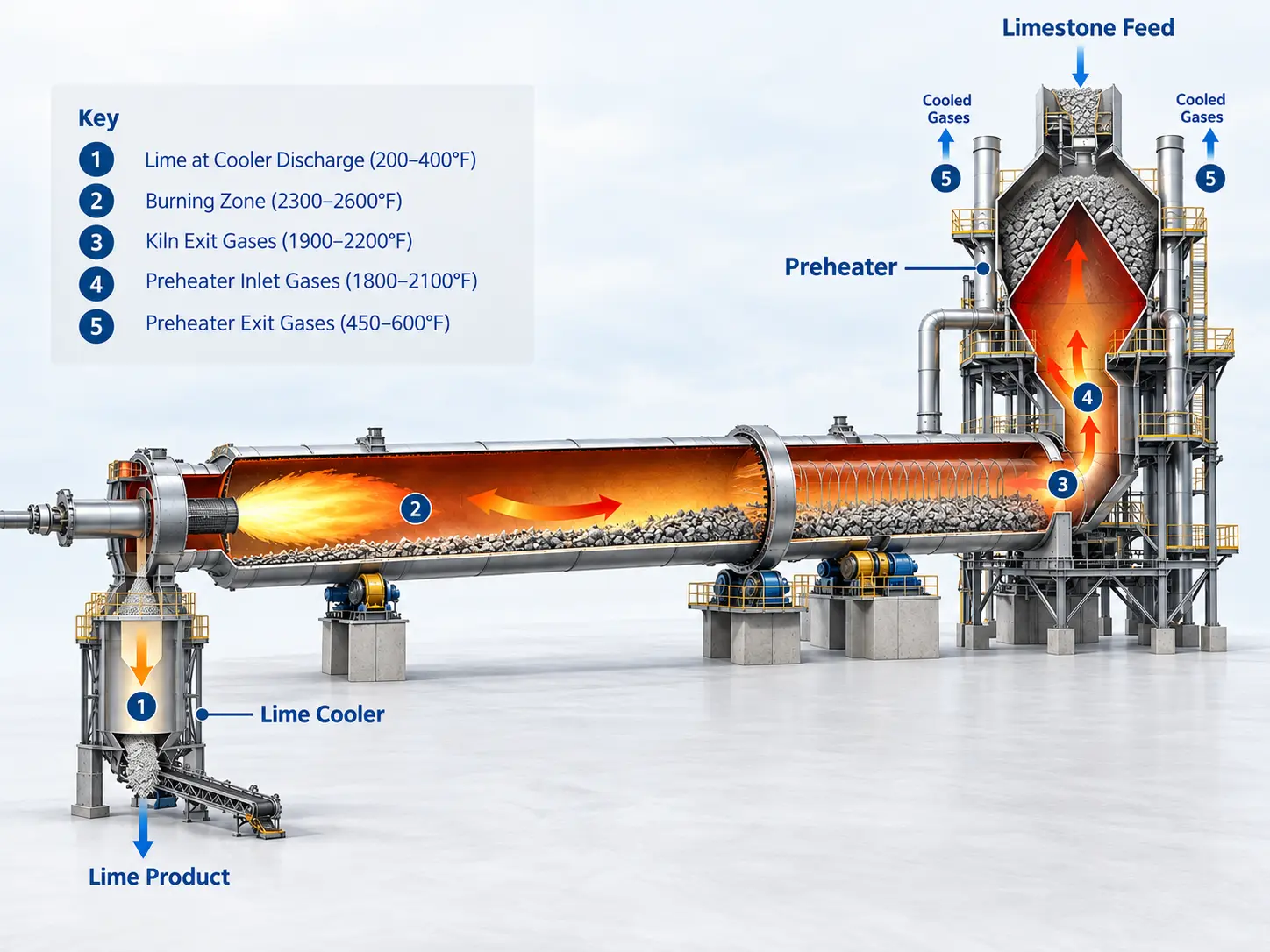
Rotary Lime Kiln
Rotary Lime Kilns operate at high temperatures and are exposed to continuous movement, abrasion and thermal stress. The refractory lining therefore needs to be selected according to the conditions in different areas of the kiln. The calcination zone can use 70% bauxite-based high-alumina bricks, mag-chrome bricks or magnesite-spinel bricks, depending on the operating conditions. The feed and discharge ends generally use 40–60% alumina bricks to withstand mechanical wear and temperature changes, while the cooler inlet can be lined with 90% alumina-based low-cement castable to handle the hot lime entering the cooling section.
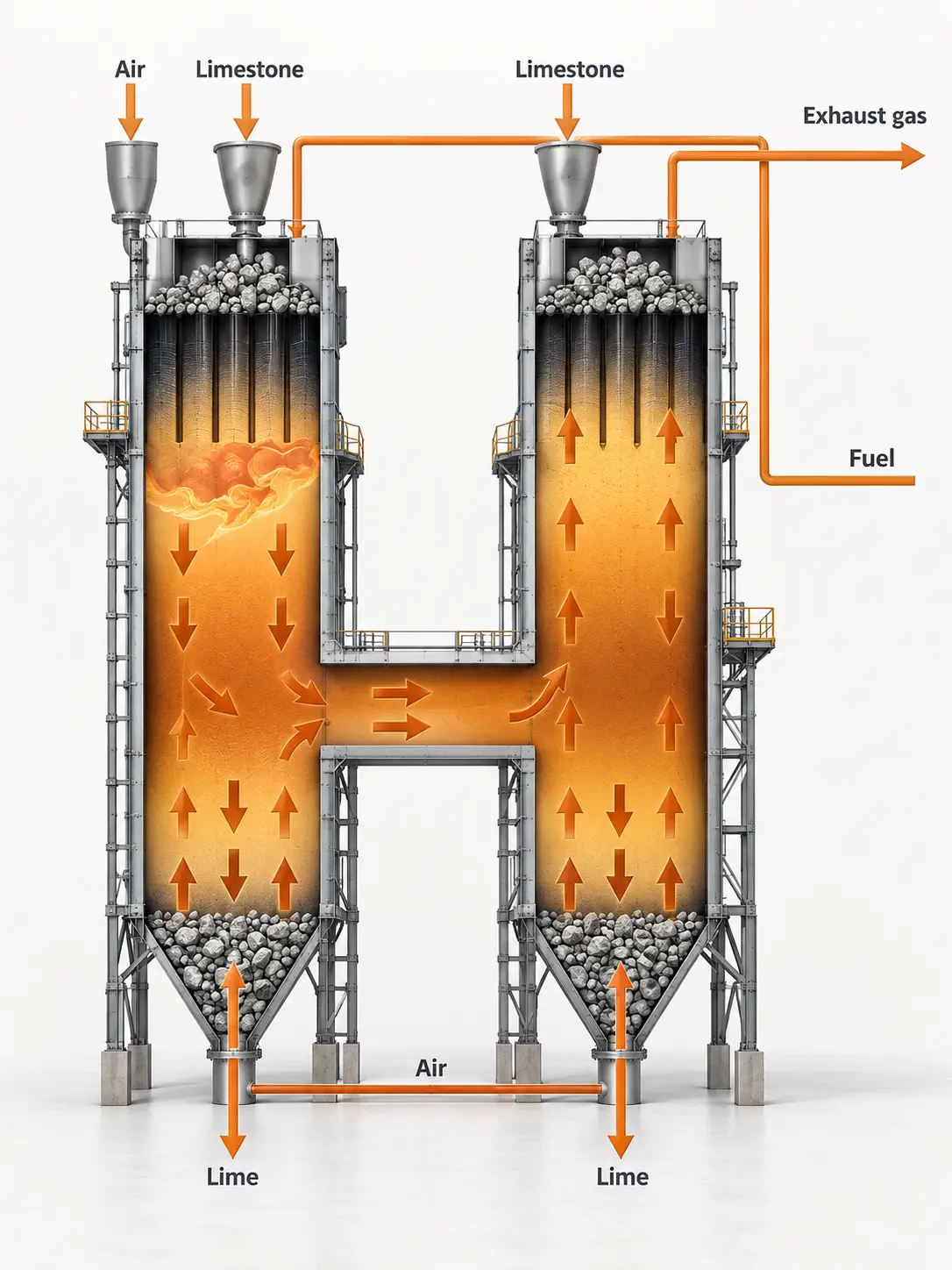
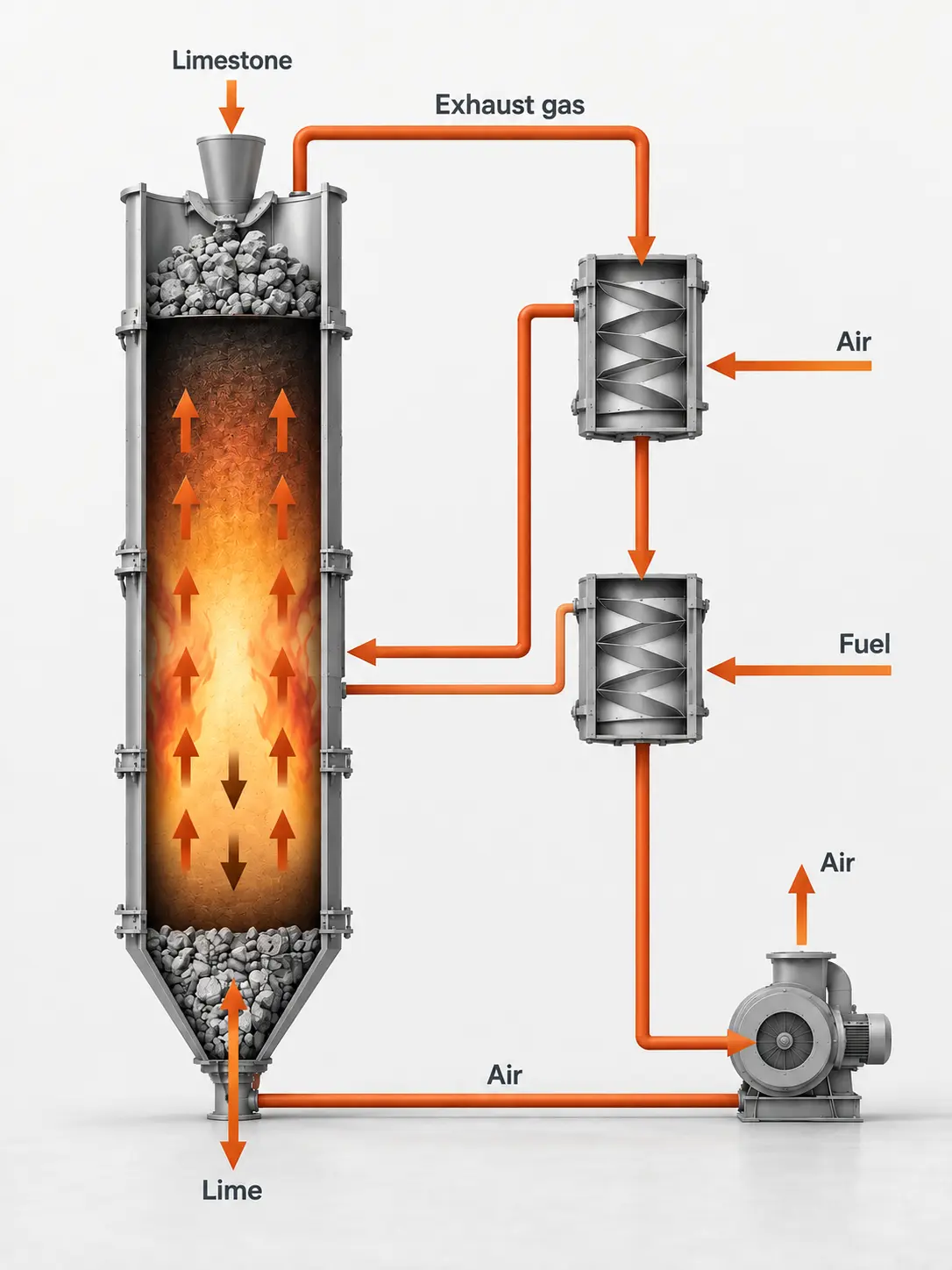
Vertical Shaft Kiln
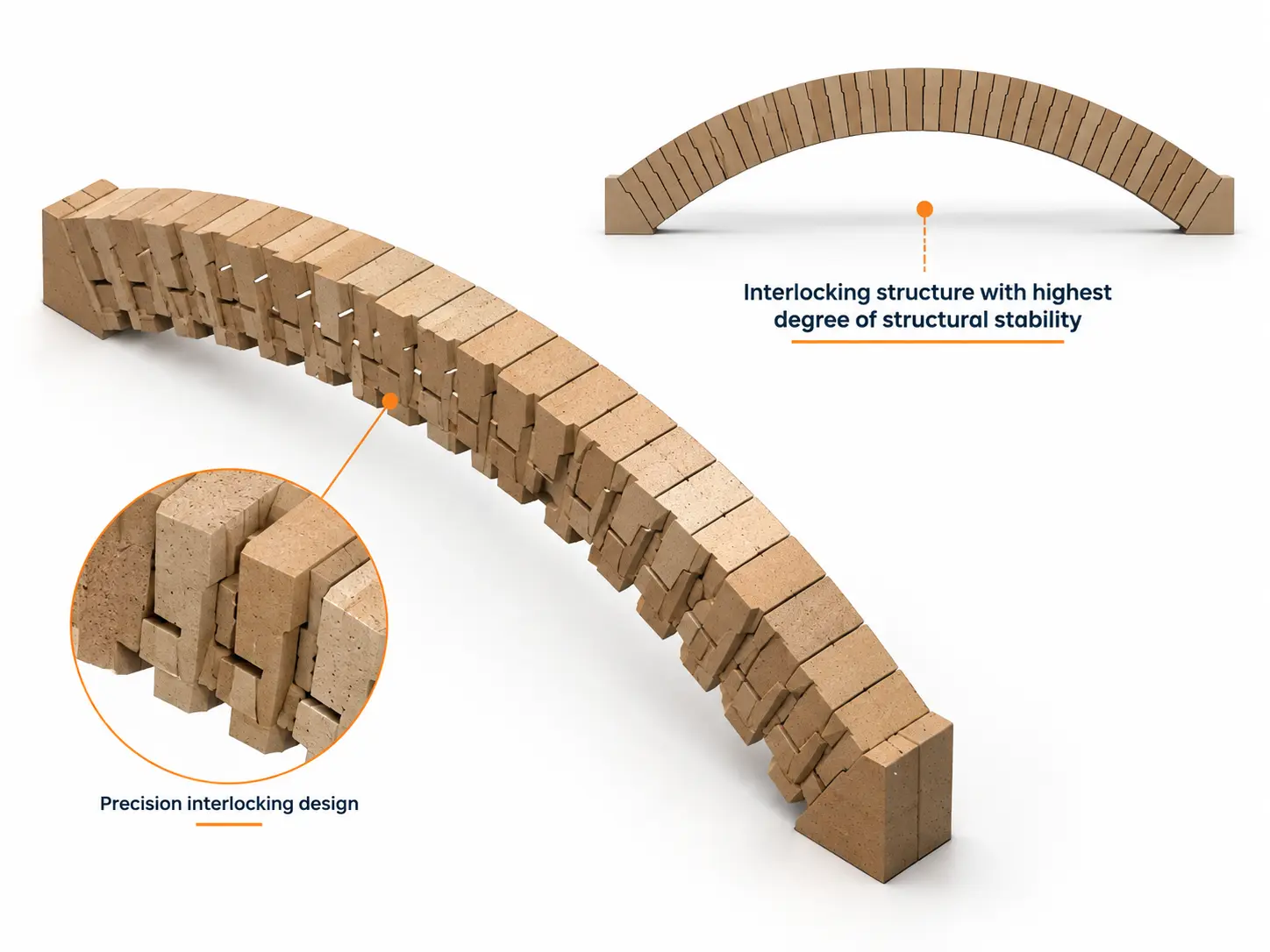
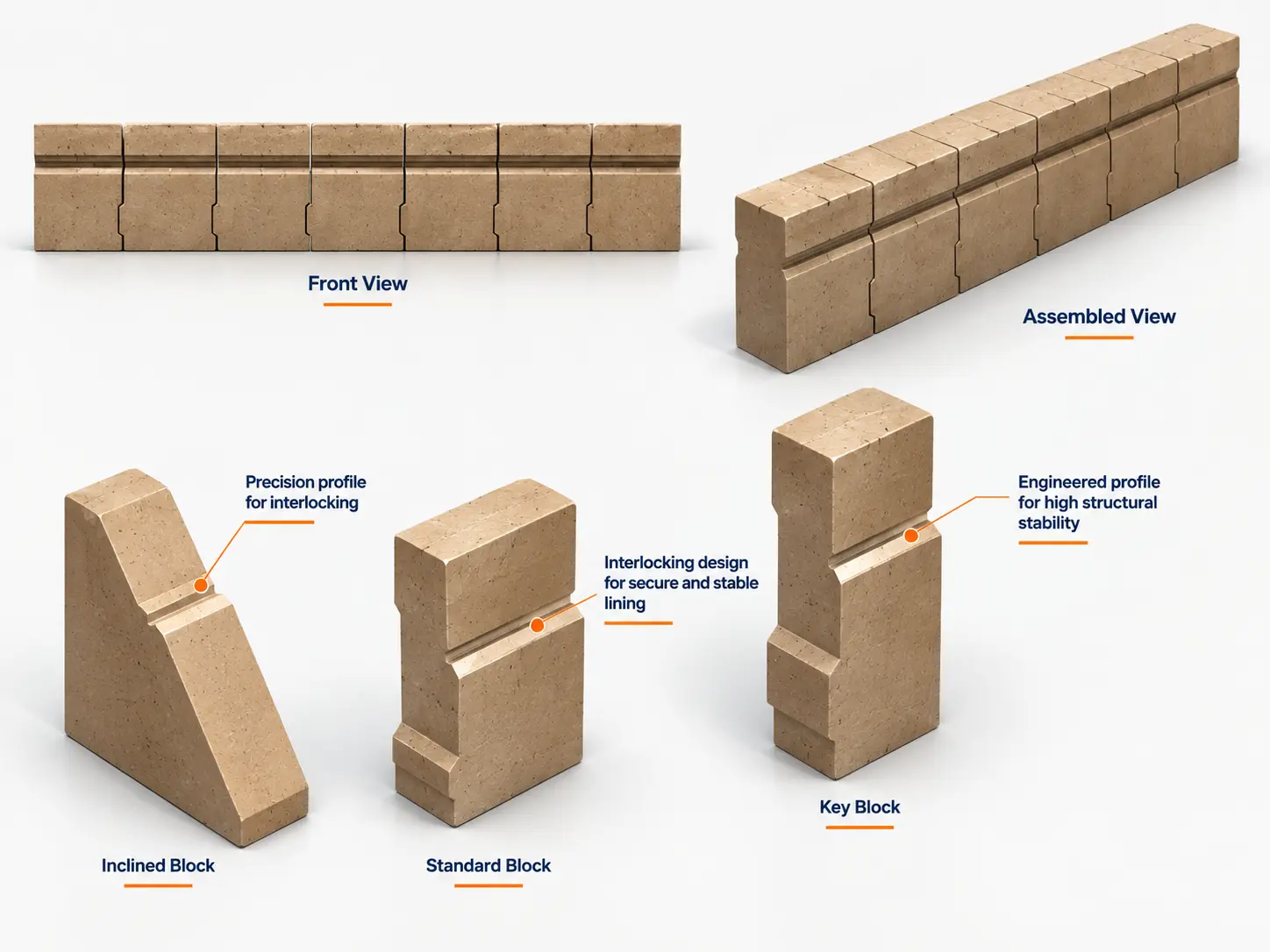
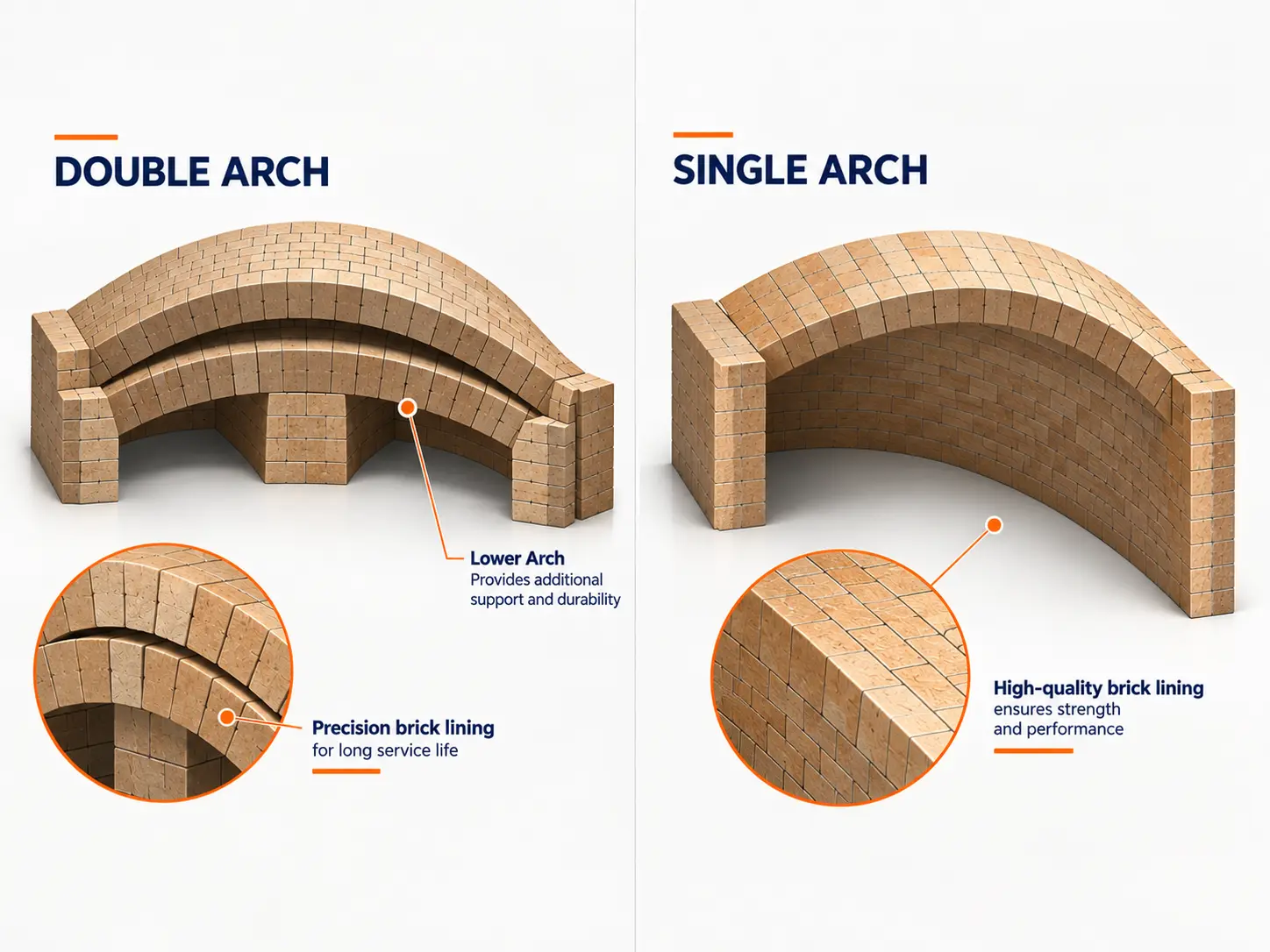
Vertical Shaft Kilns have different refractory requirements depending on the type of fuel used, the limestone being processed and the operating conditions. The lining needs to withstand corrosion, abrasion and temperature fluctuations during operation. In oil- and gas-fired kilns, refractories with good high-temperature properties are particularly important, with RUL being a key consideration. The brickwork should have tight-fitting joints with minimum mortar, along with good resistance to thermal stress, mechanical strain, corrosion and erosion. In the crossover and arch sections, high RUL and creep resistance are important, while the burning zone requires good thermal shock resistance.
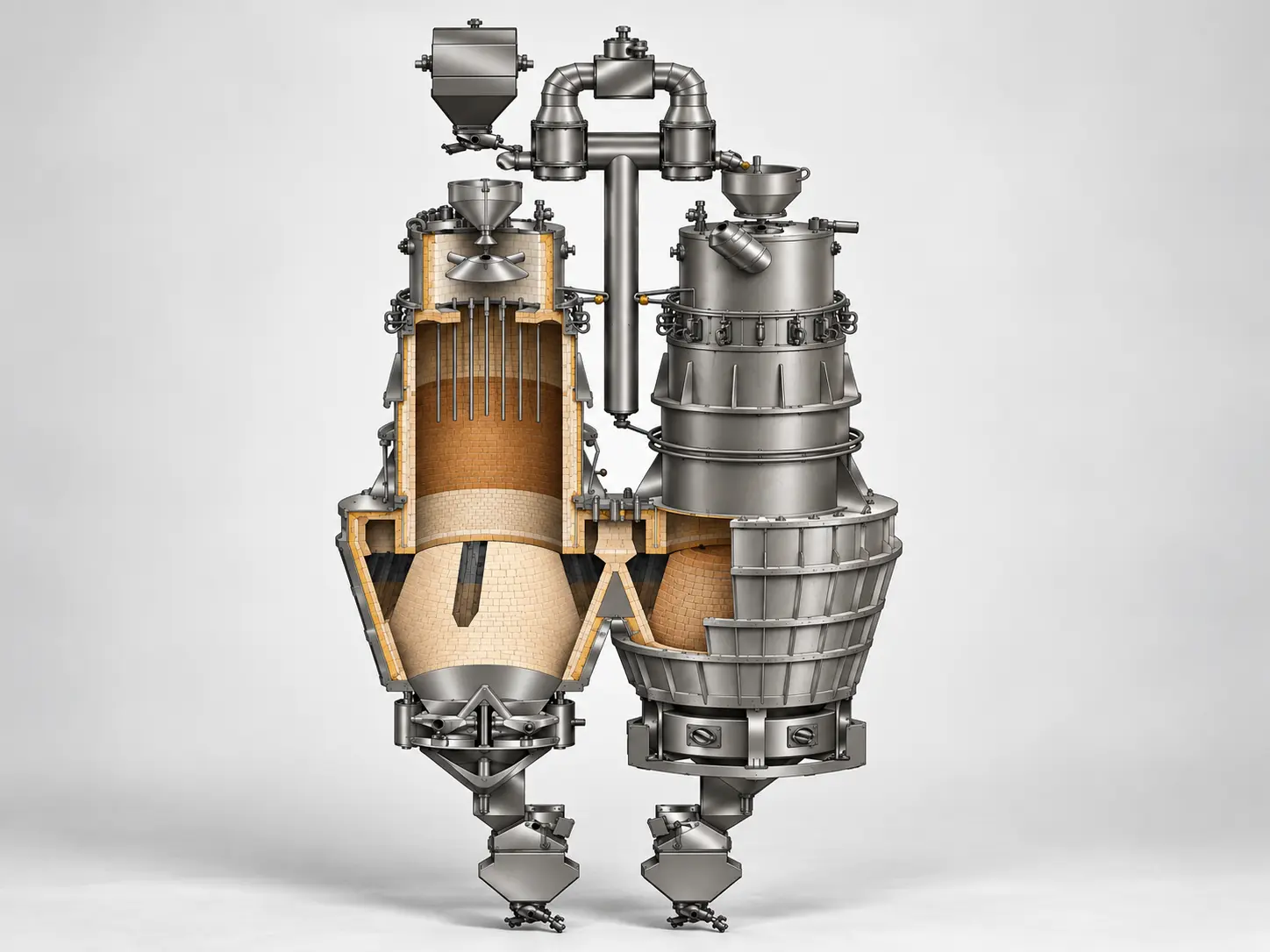
Maerz Shaft Kiln
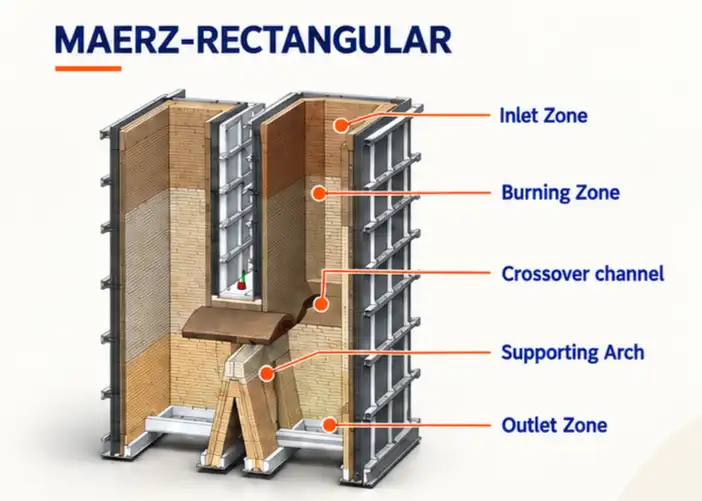
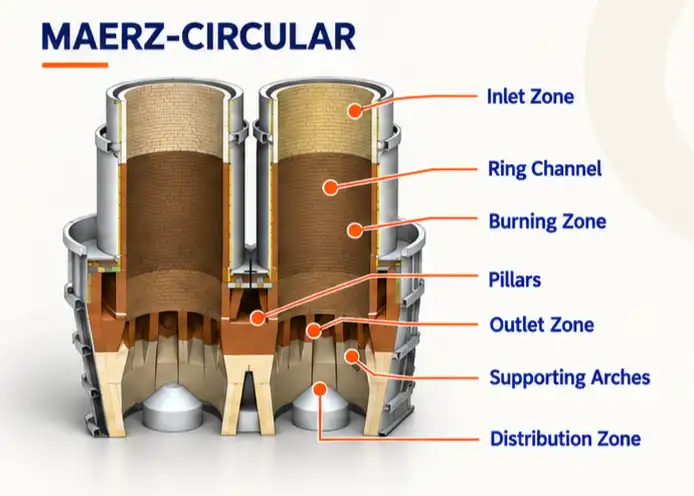
Maerz Shaft Kilns place high demands on the refractory lining due to thermal stress, mechanical strain, corrosion and erosion. The lining requires tight-fitting brickwork with minimum mortar joints and good resistance to thermal fluctuations. In the crossover and arch sections, the refractories need high RUL and creep resistance, while the burning zone requires high thermal shock resistance to withstand repeated changes in temperature.
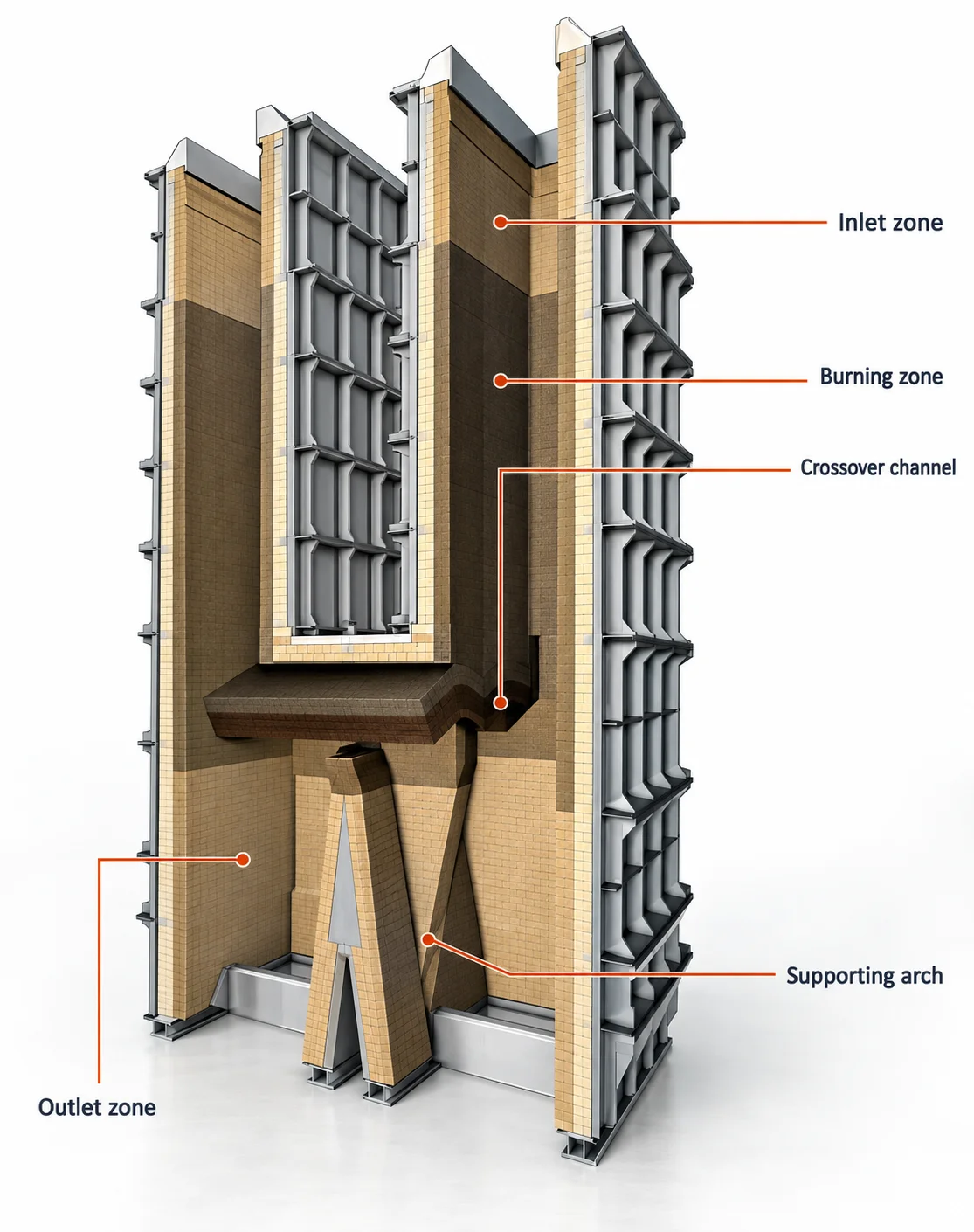
CIMPROGETTI -Twin-D Shaft Kiln
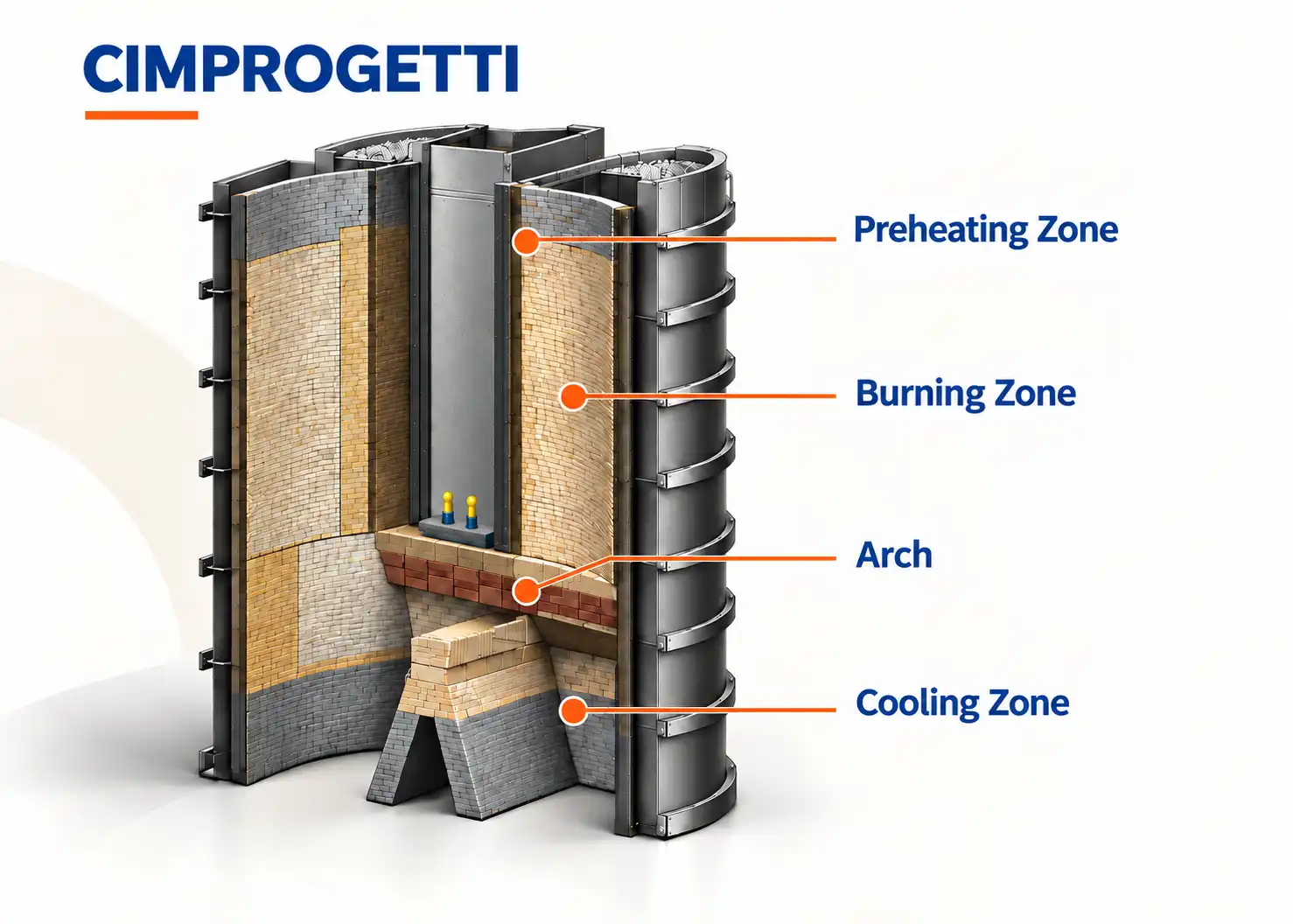
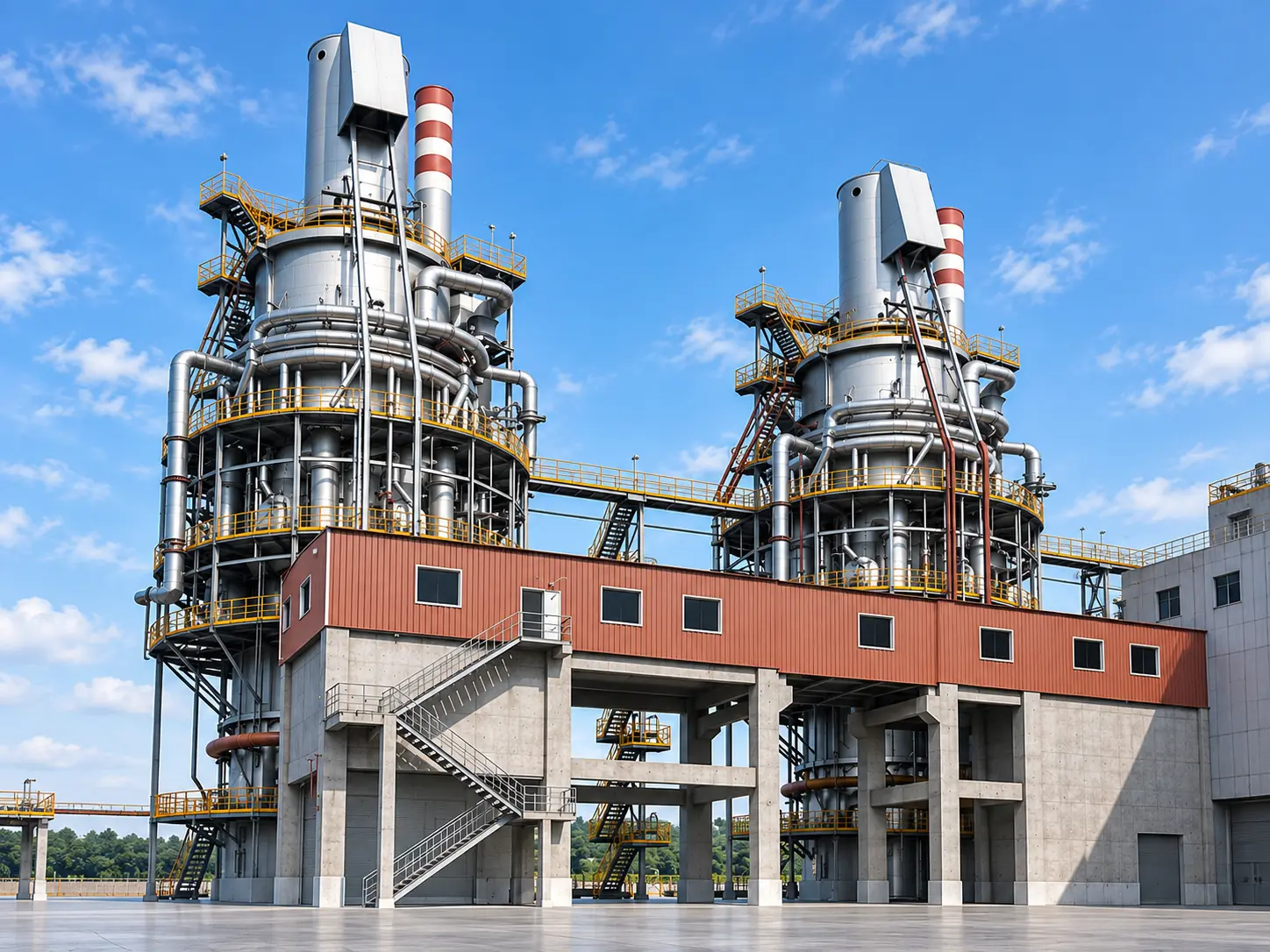
CIMPROGETTI Twin-D Shaft Kilns use two vertical shafts connected through a crossover channel, with the calcination process taking place through alternating burning cycles in the two shafts. This operating process exposes the refractory lining to thermo-mechanical and thermo-chemical stresses, while the high gas pressure inside the kiln makes tight-fitting brickwork with minimum mortar joints important. The refractory lining also needs high resistance to thermal stress, mechanical strain, corrosion and erosion. In the crossover and arch sections, good resistance to thermal fluctuations, along with high RUL and creep resistance, is required, while the burning zone requires refractories with high thermal shock resistance.
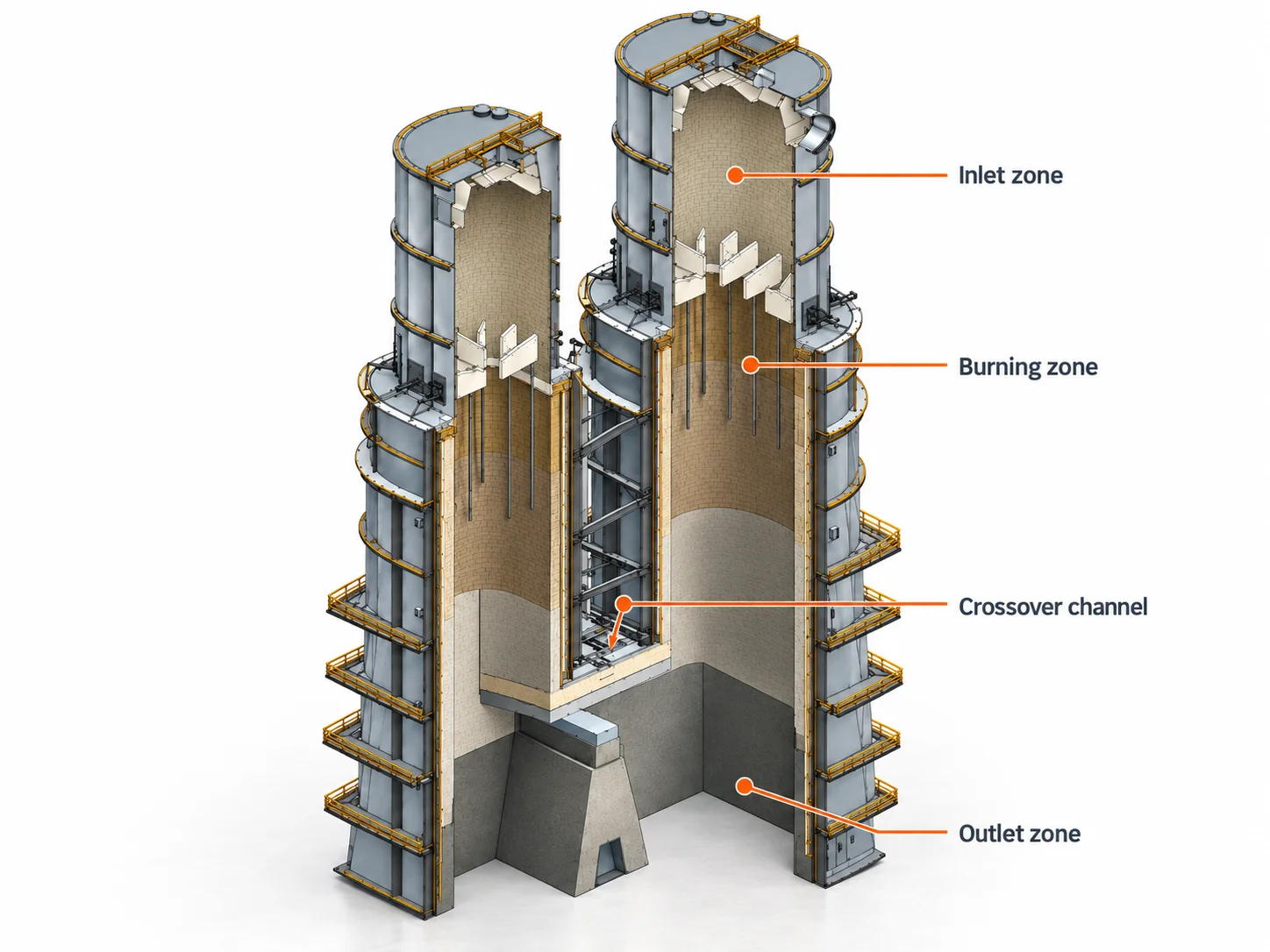
QualiCal Kiln
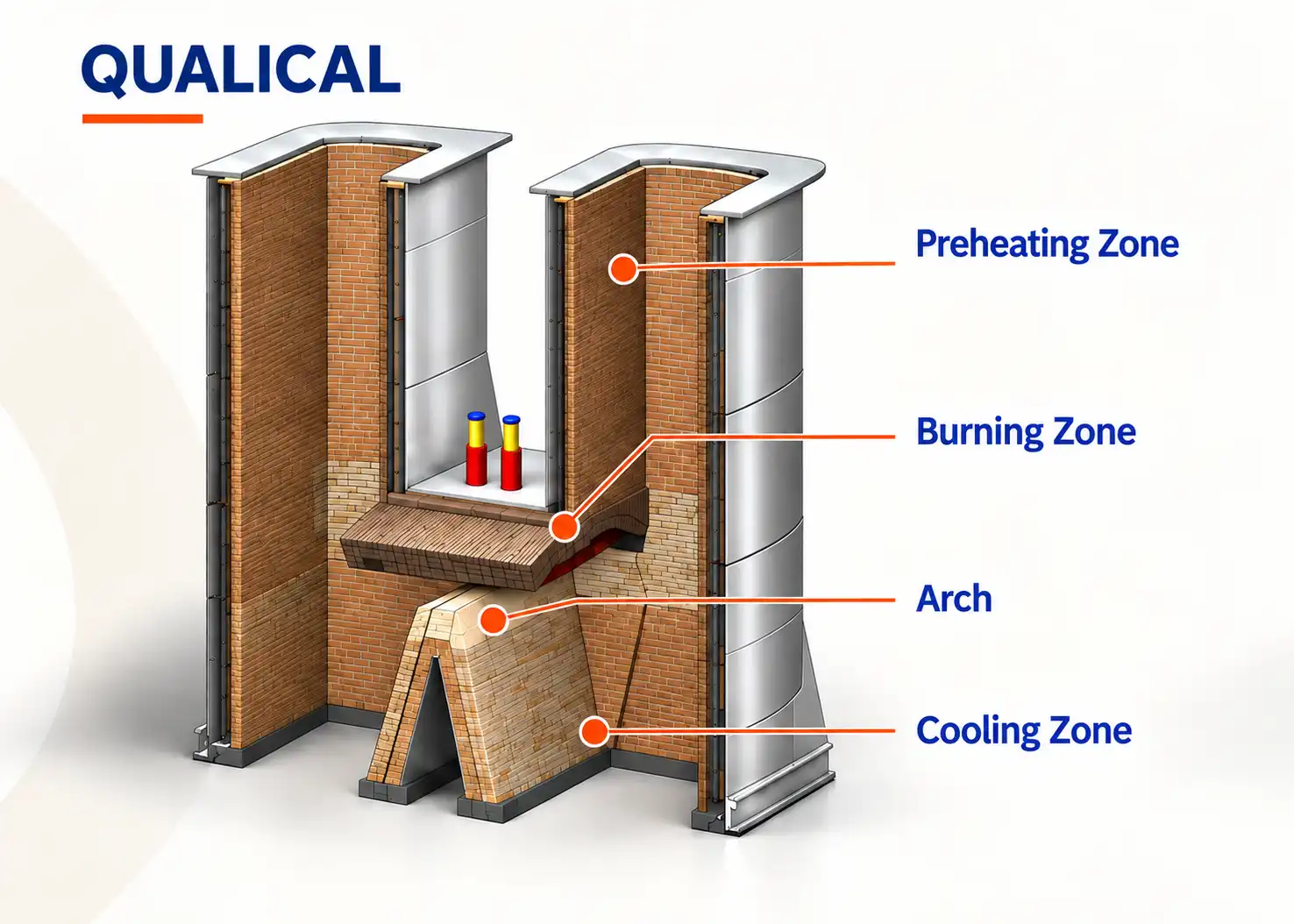
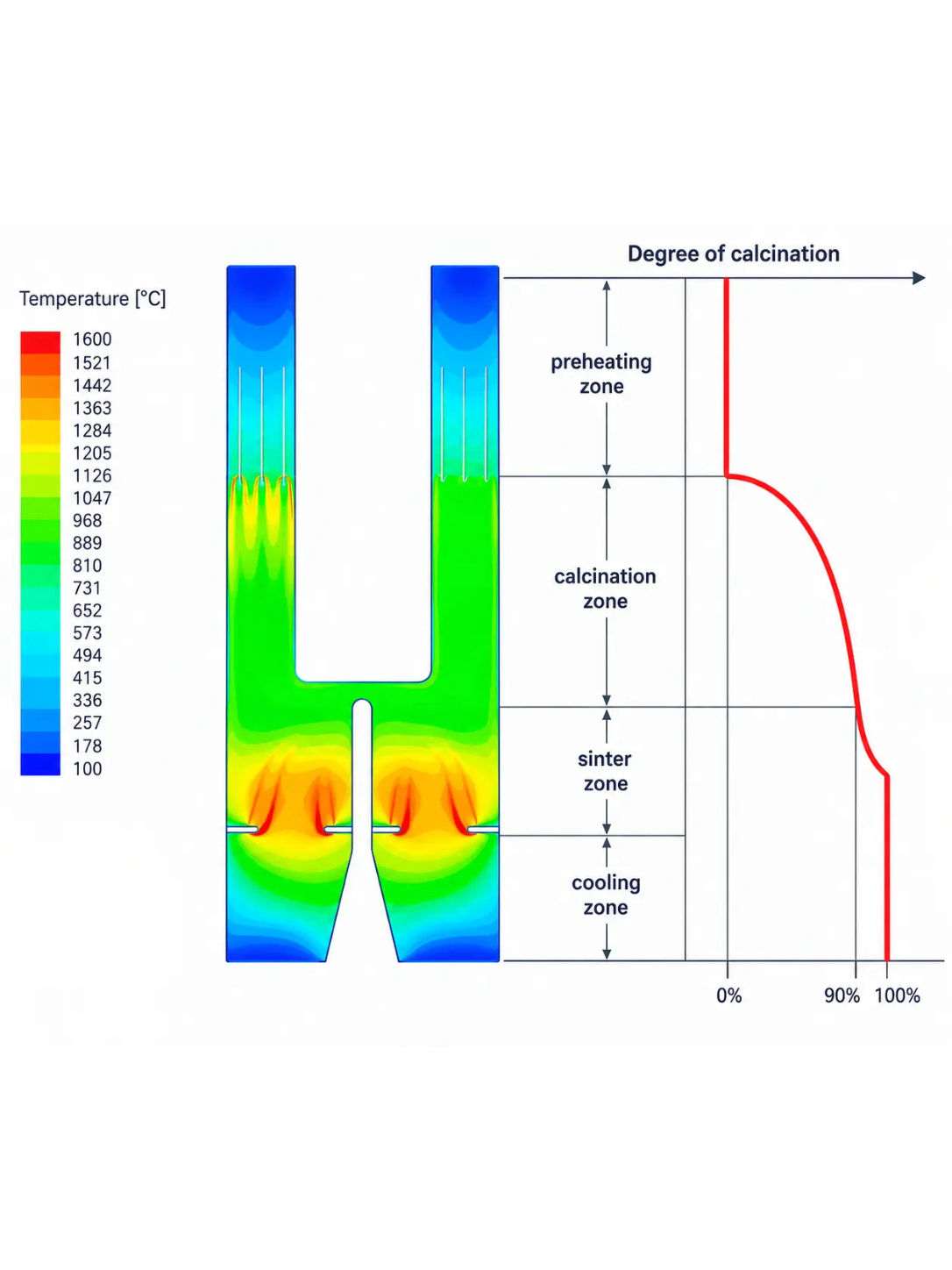
The QualiCal kiln uses twin shafts that alternate between heating and regeneration. Its design includes separate preheating, calcination and cooling zones, with the two shafts connected through a direct crossover channel. The refractory lining is selected according to the conditions in each zone, with fire-clay bricks used in the preheating and cooling zones, magnesite bricks in the calcination zone and special magnesite bricks in the crossover channel. Lightweight and insulating materials are used as backing in the relevant areas. The design also does not require special-shaped bricks.