SEN Nozzle Clogging: Flow Impact and a Carbon-Free Liner
28th Sep 2026
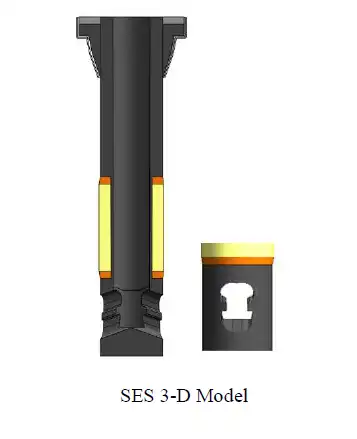
Tube changers extend casting duration and improve productivity. However, SEN nozzle clogging builds up gradually in the SES bore and ports, altering the jet characteristics leaving the ports and disturbing mould flow. This causes surface defects.
Dislodged clogs are either trapped in the steel or change the mould flux composition, and both lead to defects.
Why Does Nozzle Clogging Start?
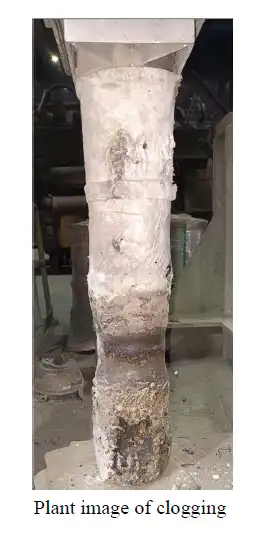
Flow along the nozzle wall is slow, which increases the residence time of molten steel on the refractory surface. In alumina-graphite Submerged Entry Nozzles (SENs), carbon and SiO₂ at the surface generate gaseous species that later re-oxidise at the interface and deposit a loose alumina layer:
SiO₂ (s) + C(s) → SiO(g) + CO(g)
Al₂O₃ (s) + 2C(s) → Al₂O(g) + 2CO(g)
Understanding the Impact Through CFD
To understand the impact of nozzle clogging, a CFD study was carried out using a 3D continuity and Navier-Stokes model with k-ε RANS turbulence.
The study considered the following casting conditions:
- Mold size / casting speed: 1200 × 210 mm / 1.2 m/min
- SES immersion: 220 mm
- Steel Temperature: 1500 °C
- Density: 7100 kg/m³
- Viscosity: 0.0062 Pa·s
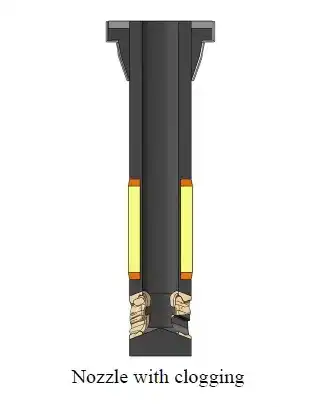
- *Clogging index (plant data): 25.45%, modelled as an artificial port clog
*Clogging index = (theoretical stopper lift − actual stopper lift) / maximum stopper lift at that casting speed.
What Happens When the Nozzle Is Clean?
With a clean nozzle, the model shows symmetric upward flow with balanced meniscus velocity.
This balanced flow pattern helps maintain the intended flow behaviour within the mold during continuous casting.
How Does SEN Nozzle Clogging Change the Flow?
The situation changes significantly when the nozzle becomes clogged.
A clogged nozzle produces strongly biased flow, resulting in non-uniform velocity and disturbance of the meniscus.
This asymmetry drives steel quality problems.
How Can Nozzle Clogging Be Mitigated?
Clogging suppression in a TCD SEN depends on port shape and anti-clogging material working together.
-
Anti-Clogging Material
Calcium zirconate and calcium titanate resist alumina adhesion due to poor wettability. A carbon-free liner does not provide a source of CO/CO₂. These factors help to avoid clogging.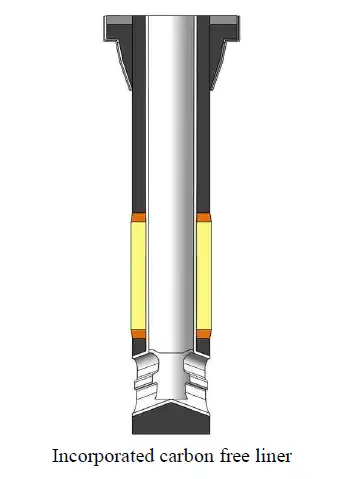
-
Port Geometry
The geometry of the nozzle also plays an important role. Oversized bores, a rounded entrance, and the nozzle bottom design combine to hinder clogging.
Thus, SEN nozzle clogging suppression in a TCD SEN depends on port shape and anti-clogging material working together.
An optimized design with a suitable carbon-free liner supports defect-free casting.
Written and Verified by:

IFGL Refractories
Bio: With over four decades of expertise, IFGL is a global refractory leader with 10 manufacturing units across Asia, Europe and North America. Specialising in Iron Making, Steelmaking and Continuous Casting, IFGL delivers advanced refractory solutions to customers worldwide through a workforce of nearly 2,000 employees.